Home › Commercial Sidewalks, Curbs, and Ramps
Reliable, professional commercial concrete sidewalk in Cincinnati, OH from Superior Concrete Cincinnati. Contact us today for a free on-site estimate.
Superior Concrete Cincinnati provides professional commercial concrete sidewalk throughout Cincinnati, OH, Ohio and the surrounding area. Our licensed, insured crew delivers safe, clean, on-time work with a free estimate before anything begins. Call (513) 993-5657 or request your free quote.
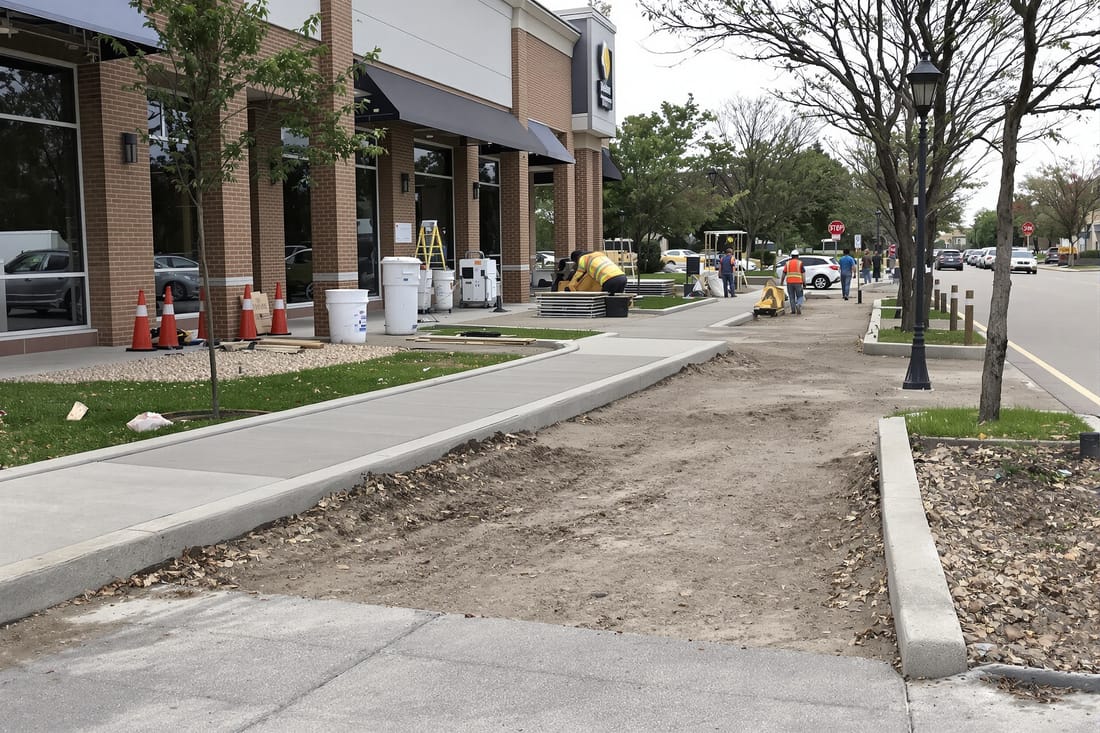
Commercial Concrete Sidewalks, Curbs, and Ramps in Cincinnati
When you manage a property in Cincinnati, your sidewalks, curbs, and ramps are not just about appearance. They are about safety, drainage, accessibility, and staying compliant with city codes. At Superior Concrete Cincinnati, we focus on commercial concrete sidewalk systems that work in the real world, not just on paper.
Commercial sidewalks take more abuse than residential walks. Foot traffic, carts and hand trucks, delivery dollies, and winter salt all put a lot of stress on the surface. That is why we design each project around how your site is actually used. A retail plaza with shopping carts needs different details than a warehouse entrance or an office park with daily commuter traffic.
Curbs and ramps are just as important. Curbs help control water flow, protect landscaping and parking lot edges, and define traffic routes. Ramps affect how people with mobility challenges, strollers, and delivery crews move in and out of your building. Our team builds these elements as one integrated system so the whole walkway network works together in rain, snow, and freeze-thaw cycles common in Cincinnati.
How We Plan and Design Your Walkway System
Every commercial concrete sidewalk, curb, and ramp project starts with a site walk. A Superior Concrete Cincinnati project lead meets you on-site, notes high traffic areas, existing drainage paths, door thresholds, trip hazards, and how vehicles move through the lot. We also check for utility lines, manholes, and cleanouts that might need special detailing.
Next, we look at grades and slopes. Cincinnati properties often have elevation changes, especially around older buildings and hillside sites. We use levels and layout tools to make sure sidewalks and ramps meet slope requirements so water runs off the surface but puddles do not form near entrances. Where needed, we recommend trench drains, curb cuts, or subtle grade changes to help push water toward catch basins, not building foundations.
For accessibility, we plan ADA-compliant curb ramps with proper slopes, landing areas, and transitions. We position ramps so users have a straight, predictable route from accessible parking to your entrances. We also plan where detectable warning panels (the textured, usually yellow plates) should be installed at street crossings or parking lot transitions.
You will see a clear layout plan before we begin. We mark proposed sidewalk widths, ramp locations, curb revisions, and any concrete thickening at drive approaches or dumpster pads. This step is where you can adjust details, such as widening a sidewalk in front of a busy doorway or adding a new ramp where visitors naturally cut across the lot.
Concrete Specifications, Materials, and Finish Options
Commercial concrete sidewalks in Cincinnati have to deal with freeze-thaw cycles, deicing salts, and plow blades, so mix design matters. We typically recommend a 4,000 to 4,500 psi air-entrained concrete mix for sidewalks and curbs. The air entrainment gives microscopic air pockets that help the slab survive winter expansion and contraction.
Thickness and reinforcement depend on use. For standard foot traffic sidewalks, we commonly pour 4 inches thick, with control joints cut or tooled at appropriate spacing. In areas where deliveries cross the walk, dumpster access paths, or where maintenance vehicles drive onto the sidewalk, we often increase thickness to 6 inches and add reinforcement such as welded wire mesh or rebar mats. Curbs are commonly poured integrally with the gutter or sidewalk, with extra depth below grade to resist impact from vehicles.
Finish options are more than just looks. A broom finish is common for commercial concrete sidewalks because it gives reliable traction when surfaces are wet or slushy. For high-visibility entries, we can offer light decorative touches, such as colored concrete bands, saw-cut patterns, or exposed aggregate strips that still maintain slip resistance. On ramps and at crosswalks, we typically use a more pronounced broom texture for grip.
We also install pre-manufactured detectable warning panels in the concrete at curb ramps where required. These are usually cast-in-place during the pour so they are fully bonded and level with the ramp surface, which helps reduce tripping risks and long-term maintenance issues.
Installation Process and Scheduling Around Your Operations
Once the design is set, Superior Concrete Cincinnati schedules work around your business hours as much as possible. For retail and medical sites, we often phase work so one entrance or sidewalk route stays open while another area is under construction. For industrial facilities, we can plan concrete pours early in the morning or on weekends to minimize disruption.
The installation process typically starts with demolition and removal of existing concrete or asphalt. We use saws to make clean cuts where new sidewalks will tie into remaining pavement. Old material is broken up and hauled off for proper recycling or disposal. Then we prepare the subgrade, which is a critical step. We compact the soil and install a base layer of crushed stone where needed to reduce settling and frost heave.
Formwork goes in next to define the edges of sidewalks, ramps, and curbs. This is where precise elevations and slopes are locked in. We double-check critical heights at door thresholds, curb edges, and ramp landings before any concrete truck arrives. For curbs, we either form them separately or as part of a curb-and-gutter section, depending on the parking lot design.
Concrete is then placed, spread, and consolidated. We strike it off to the right thickness, float the surface, and create control joints at calculated intervals to help control where cracks form. While the concrete is still workable, we apply the broom finish, install detectable warning tiles in ramps, and refine edges so they are smooth but well-defined. For projects scheduled in cooler Cincinnati months, we use curing blankets or curing compounds as needed so the concrete does not freeze before it gains strength.
Curing time is planned into your schedule. Light foot traffic is often allowed after about 24 hours, but vehicle crossings or heavy carts usually need 5 to 7 days depending on temperature. We will give you specific opening times for each area so you can plan signage and temporary walkways.
Cost Factors, Maintenance, and Cincinnati Weather Considerations
Commercial concrete sidewalk, curb, and ramp pricing is driven by more than just square footage. Access to the work area, demolition needs, complex forming, and site conditions all matter. Tight downtown Cincinnati locations that require hand removal, small equipment, or staged concrete deliveries will cost more than open suburban sites. Curved layouts, integral color, decorative bands, or extra-thick sections for vehicle loading also affect the budget.
Subgrade remediation is another cost driver. If we find soft spots, poor drainage, or old fill material that was never compacted, we will explain what needs to be corrected before concrete goes in. Fixing these issues up front reduces the risk of uneven settling, heaving, and cracking that could become safety hazards later.
Cincinnati weather has a direct impact on both timing and performance. We typically avoid major flatwork pours during very cold snaps or extreme heat. In spring and fall, when freeze-thaw cycles are frequent, we pay close attention to curing protection and drainage around the new concrete so standing water does not sit on fresh surfaces. We also advise against using deicers with ammonium or magnesium compounds on new concrete, especially in the first winter, because they can accelerate surface damage.
For long-term maintenance, we recommend periodic joint cleaning, spot crack sealing where appropriate, and inspection of curb lines and ramps after plowing season. Proper snow removal techniques, such as using plastic blade guards and avoiding metal edges scraping aggressively at curb transitions, help keep edges from spalling. If a section settles or cracks in a way that creates a trip hazard, we can assess whether grinding, mudjacking, or partial panel replacement is the most cost-effective fix.
Superior Concrete Cincinnati is always straightforward about whether you truly need full replacement or if strategic repairs will keep you compliant and safe. We are happy to walk your property with you, mark priority areas, and help you plan phased improvements over several seasons to fit your budget and Cincinnati weather windows.