Home › Concrete Parking Lots and Heavy-Duty Pavement
Reliable, professional concrete parking lot in Cincinnati, OH from Superior Concrete Cincinnati. Contact us today for a free on-site estimate.
Superior Concrete Cincinnati provides professional concrete parking lot throughout Cincinnati, OH, Ohio and the surrounding area. Our licensed, insured crew delivers safe, clean, on-time work with a free estimate before anything begins. Call (513) 993-5657 or request your free quote.
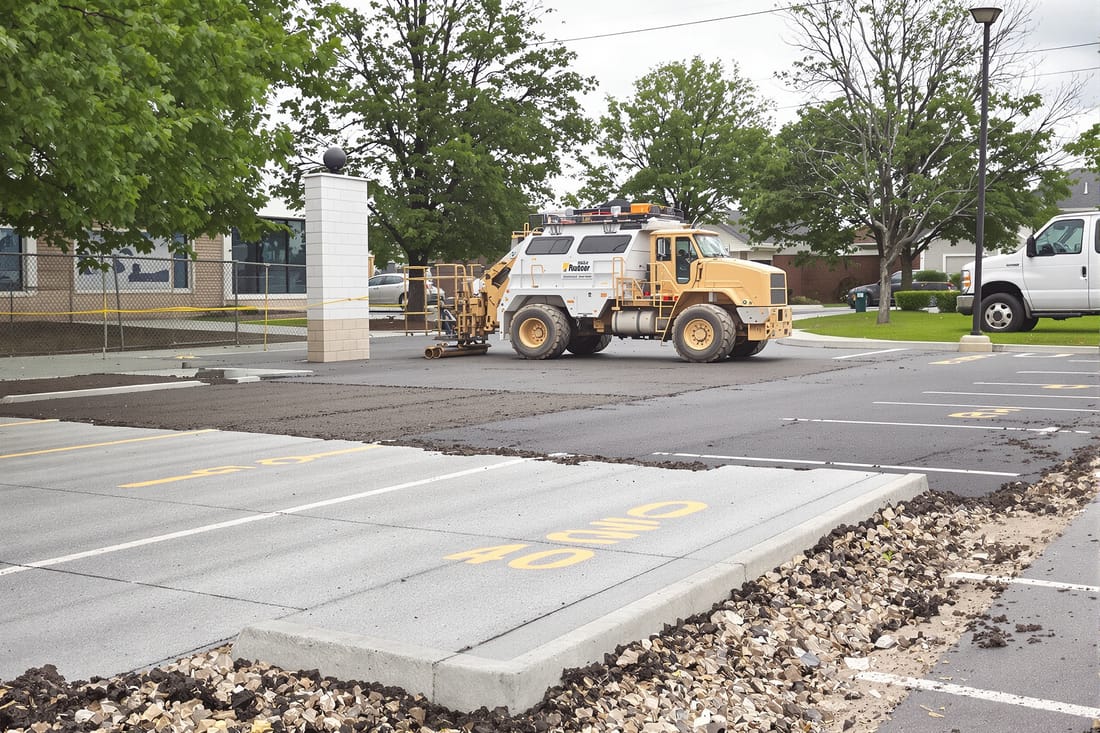
Concrete Parking Lots Built for Cincinnati Traffic
A concrete parking lot has to do more than look clean on day one. In Cincinnati, it needs to handle freeze-thaw cycles, snow plows, delivery trucks, and standing water without breaking apart. Superior Concrete Cincinnati designs and builds concrete parking lots and heavy-duty pavement specifically for these conditions, not from a one-size-fits-all template.
We start with use and traffic. A small office lot used by passenger cars can use a different pavement thickness and joint layout than a grocery store with frequent semi-truck deliveries or a medical facility with ambulance traffic. During our site visit we count access points, turning areas, and loading zones, then map out where the concrete needs to be thickened or reinforced.
Local soil conditions in Cincinnati vary a lot between river valley fill, older neighborhoods, and newer developments. Before we quote a job, we test or probe the subgrade, check for soft pockets, and review any available geotechnical reports. This is what determines how much base stone is needed and where underdrains make sense. Skipping this step is one of the main reasons parking lots settle or crack early.
From there, we give you a layout that fits your property and zoning requirements, including drive lanes, ADA-accessible spaces, dumpster pads, and any heavy-duty pavement zones. We also factor in how snow will be pushed, where meltwater will go, and how to avoid ice buildup at entrances or walkways.
How We Build Long-Lasting Concrete Parking Lots
Superior Concrete Cincinnati follows a consistent concrete parking lot installation sequence so you know what to expect and why each step matters.
1) Demolition and stripping: We remove existing asphalt or concrete with breakers and loaders, haul it to a recycler when possible, and strip organic topsoil. Keeping organic material out of the base is key to preventing soft spots later.
2) Subgrade shaping and compaction: We grade the native soil to the plan elevations, then compact it using plate compactors or rollers until it reaches specified density. Any pumping or yielding areas are undercut and replaced with compacted aggregate. On some Cincinnati clay sites we use a separation fabric between soil and stone to keep the base from mixing into the subgrade.
3) Aggregate base installation: For most concrete parking lots we place 4 to 8 inches of crushed stone, more in heavy-duty pavement areas. We laser-grade and compact the base to achieve consistent thickness and slope. A uniform base prevents panels from rocking and reduces random cracking.
4) Forms, joints, and steel: We set straight forms, establish final slopes, and mark out joint locations before the first yard of concrete arrives. In loading zones, trash enclosure areas, and entrances that see frequent truck traffic we often add rebar or welded wire reinforcement. We also place dowel baskets at joints that will carry heavier loads so adjacent slabs share the weight.
5) Concrete placement and finishing: We typically use a 4,000 to 5,000 psi air-entrained mix suited to Cincinnati freeze-thaw conditions. Our crews discharge, screed, bull float, and then machine finish the surface to a uniform texture. We watch the weather carefully so we do not finish too early, which would weaken the surface. For most lots we use a broom finish for traction.
6) Curing and opening: We apply curing compound or install curing blankets in cooler weather to control moisture loss, then protect the slab from early traffic. Passenger vehicles can typically use the lot after several days, while heavy truck traffic may wait longer depending on temperature and mix design.
Heavy-Duty Pavement for Trucks, Dumpsters, and Loading Docks
Not every area of a parking lot needs the same strength. Superior Concrete Cincinnati separates light-duty and heavy-duty pavement so you are not overpaying for thickness where it is not needed, and you are not underbuilding where it matters.
For loading docks, dumpster pads, drive-through lanes, and fire lanes we typically thicken the pavement and increase base depth. Common heavy-duty sections in our Cincinnati projects run from 7 to 9 inches of concrete over 6 to 10 inches of compacted aggregate, but the exact design is based on the number of predicted truck visits and axle loads.
We often add doweled joints and continuous reinforcement in these heavy-use zones. Doweled joints reduce vertical movement between slabs and help prevent edge chipping when trucks turn or stop near joints. In areas where trucks repeatedly spin or turn sharply, such as drive-through corners or fuel islands, we may adjust the joint layout and surface texture to resist rutting and surface wear.
Another consideration is equipment access. Trash trucks, box trucks, and delivery vehicles have different turning radii. We plan turning templates into the layout so drivers are not forced to drive over curb islands or landscaped areas, which can eventually undermine pavement edges.
For industrial or municipal clients needing concrete roadways in addition to parking, we adapt these heavy-duty pavement designs to longer runs, coordinate with city specifications, and tie into existing public streets with proper transitions and dowels.
Local Climate, Timing, and Concrete Mix Choices in Cincinnati
Cincinnati weather is hard on concrete. Freeze-thaw cycles, road salt, and wide temperature swings can shorten the life of a poorly designed parking lot. Superior Concrete Cincinnati selects mixes and scheduling strategies specifically for this climate.
We typically use air-entrained concrete that resists freeze-thaw damage. Where deicers or salt will be used heavily, such as near entries or slopes, we discuss using a low water-cement ratio and sometimes supplementary cementitious materials to improve durability. We also recommend sealing the surface after the first year of service to reduce salt penetration.
Scheduling matters. In Cincinnati, the most reliable window for concrete parking lot work is usually April through October, when temperatures and overnight lows allow proper curing. We can work outside that range but may use insulated blankets, accelerators, or modified curing plans, which can add to cost. For large commercial lots, we often phase work so parts of the lot remain open, and we coordinate with your busiest and slowest times of day or week.
Rain and rapid temperature drops can ruin a finish if not managed. We monitor local forecasts and will reschedule pours if conditions risk surface scaling or delayed set. When weather changes during a pour, we have wind breaks, evaporation reducers, and curing compounds on hand to protect the slab.
Design Options, Drainage, and What Drives Cost
A functional concrete parking lot starts with drainage. Standing water will accelerate surface wear, increase freeze-thaw damage, and create slip hazards. Superior Concrete Cincinnati designs slopes and drain locations to move water to catch basins or swales, not toward building entrances.
We typically design for a minimum slope of 1 to 1.5 percent in drive lanes and parking rows. On flat Cincinnati sites, we may incorporate trench drains or additional catch basins to avoid ponding. Before construction we check existing structures, door thresholds, and sidewalks to ensure new pavement elevations work with what is already there.
Cost is driven mostly by four factors: thickness and reinforcement, total area, site prep, and site access. Heavier loads require thicker pavement and more base stone, which quickly increases material volume. Sites with poor soils or significant removal of existing material will need more base and labor. Tight urban locations may require smaller equipment or off-hour work, which affects labor costs.
Other variables include concrete mix design, decorative upgrades, and drainage structures. A basic broom-finished commercial lot costs less than a lot with colored concrete bands, decorative saw cuts, or integral curbs. However, certain upgrades, such as thicker concrete at dumpster pads or better drainage structures, are cost-effective because they prevent early failures.
We walk clients through a line-item estimate that spells out each component: demolition, earthwork, base stone, concrete thickness by zone, reinforcement, joints, drainage, and striping. This transparency makes it easier to decide where to spend more and where you can safely save.
Common Parking Lot Problems and How We Prevent Them
A lot of the repair work we see around Cincinnati comes from the same avoidable mistakes: thin pavement under heavy vehicles, poor drainage, un-compacted base, and lack of joint planning. Superior Concrete Cincinnati builds new concrete parking lots and heavy-duty pavement with these issues in mind so you are not paying for major repairs in just a few years.
Cracking is inevitable in concrete, but uncontrolled random cracks are not. We place control joints at calculated intervals based on slab thickness and shape so cracks occur in the joints instead of across the surface. In long drive aisles or irregular shapes, we adjust panel sizes and joint patterns so no panel is overly long or L-shaped, which is more likely to crack.
Parking lot edges are another common failure point. When heavy vehicles drive off the edge of thin pavement, the slab can break away. We combat this with proper edge thickening in high-risk areas, full-depth base to the outside of the pavement, and in some cases integral curbs that protect the edge.
Salt and surface scaling show up a few winters after construction if curing is rushed or the mix is not suitable for freeze-thaw. Our crews protect fresh slabs, apply curing correctly, and avoid over-troweling, which can weaken the surface paste. We also provide maintenance guidance, such as waiting the recommended time before applying deicers on new concrete.
If you already have an existing lot with problems, we evaluate whether panel replacements, full-depth reconstruction, or added heavy-duty slabs at specific locations will give the best long-term value. Sometimes replacing a failing asphalt loading zone with a properly designed concrete heavy-duty pavement section is the most cost-effective long-term fix.