Home › Commercial Concrete Foundations and Footings
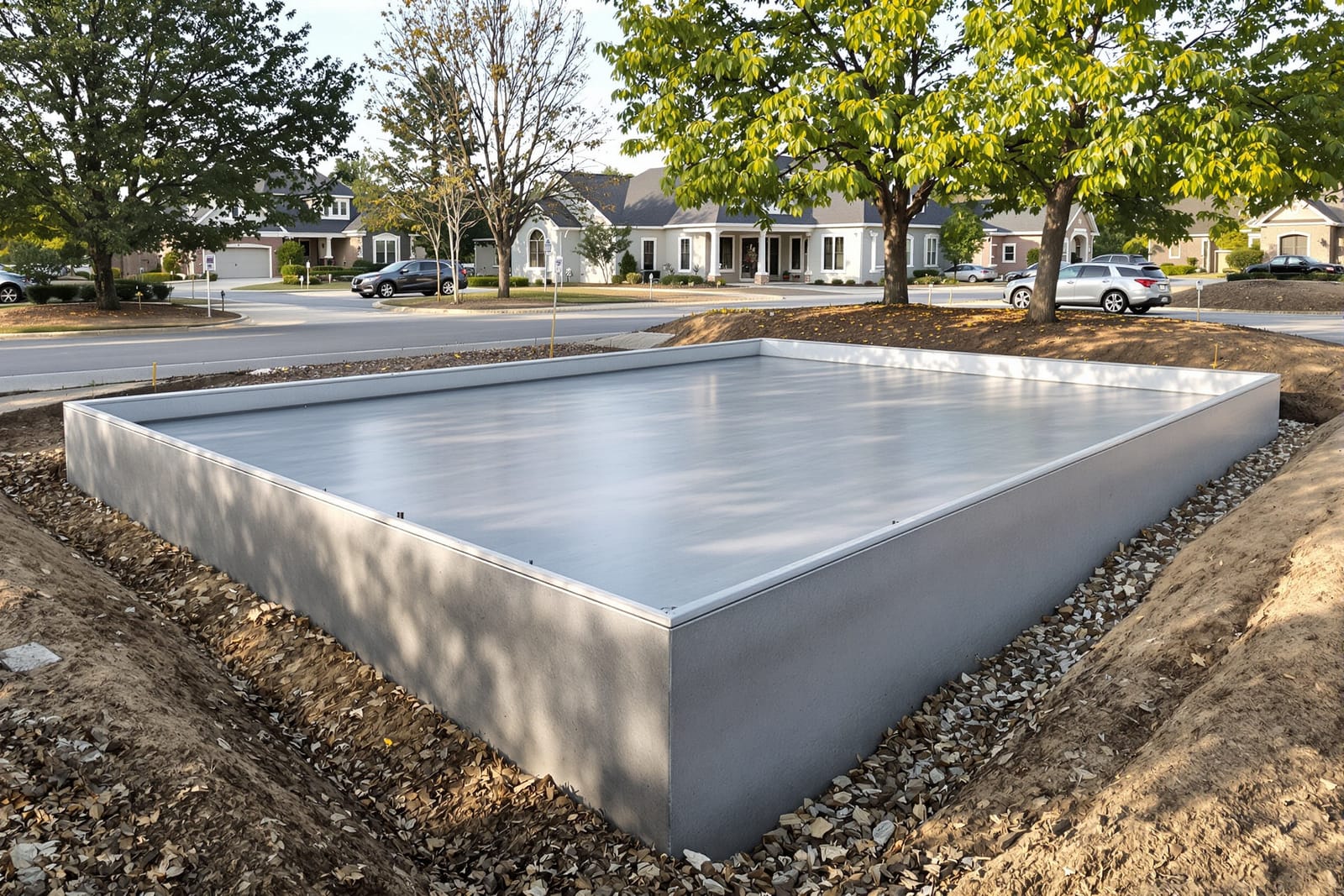
Support your building with properly engineered commercial concrete foundations in Cincinnati, OH. We install footings, grade beams, and walls that meet structural specifications and inspections. Our crews coordinate with engineers and other trades to keep foundation work accurate, efficient, and ready for vertical construction.
Superior Concrete Cincinnati provides professional commercial concrete foundations throughout Cincinnati, OH, Ohio and the surrounding area. Our licensed, insured crew delivers safe, clean, on-time work with a free estimate before anything begins. Call (513) 993-5657 or request your free quote.
Commercial concrete foundations tailored to Cincinnati projects
Superior Concrete Cincinnati installs commercial concrete foundations and footings for businesses, developers, and facility managers across the Cincinnati metro area. We focus on structural performance first, so the building, equipment, and people that rely on your foundation are protected for the long term.
Commercial foundations are not one size fits all. A small retail shell on stable soil in Blue Ash does not need the same footing design as a heavy manufacturing plant along the river or a multi story office building downtown. We coordinate with your structural engineer to translate the drawings into a practical, buildable plan that accounts for local soil conditions, groundwater, access, and schedule.
Our crews are used to working in active commercial environments, including tight urban sites, existing parking lots, and phased expansions. We plan staging, concrete truck access, and pumping methods around your site so the foundation work does not choke off the rest of your project. The goal is a solid, accurately built foundation that passes inspection on the first visit and lets the vertical trades start on time.
Site evaluation, soils, and foundation design considerations
Before any footing forms are set, the site has to be understood. On commercial projects in Cincinnati, that usually starts with a geotechnical report. We read the boring logs and recommendations, then match them to actual field conditions during excavation. Fill soils are common on older industrial sites and along the riverfront, and ignoring that is one of the fastest ways to end up with settlement problems.
Based on the soils and the building loads, your engineer will specify either shallow spread footings, thickened edge slabs, combined footings, or deep foundations like drilled piers or caissons. Superior Concrete Cincinnati does not change the design, but we help catch constructability issues early. For example, if the specified footing depth will conflict with existing utilities or an unknown rock shelf, we flag it before you burn days on rework.
We also look at groundwater and drainage. In parts of Cincinnati, especially near low lying areas or close to Mill Creek and the Ohio River, water in the excavation is normal. That does not stop the job, but it affects how we handle dewatering, sub base preparation, and concrete placement. Getting these conditions addressed clearly during preconstruction keeps your foundation schedule and budget from drifting.
How we build commercial concrete foundations and footings
The actual build process is straightforward, but every step matters.
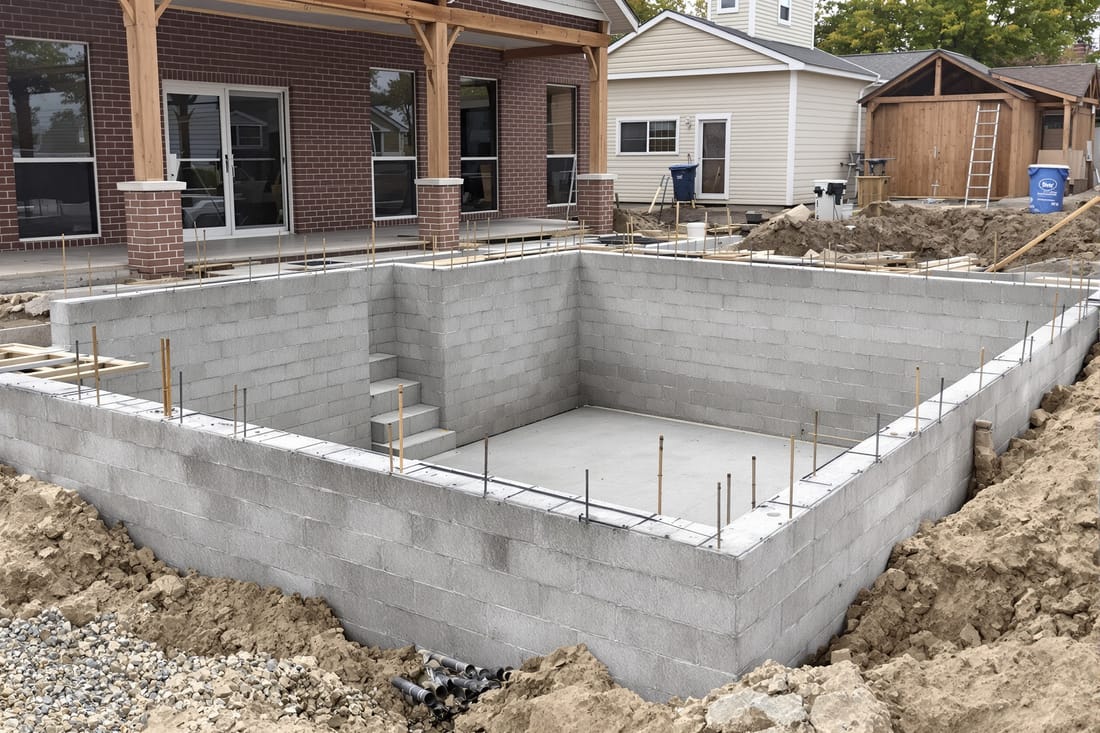
Layout and excavation: We start by verifying control points and building corners with your surveyor. Footings are laid out to the engineer’s dimensions, then excavated to the required width and depth, usually below local frost depth. For commercial projects in Cincinnati we commonly see footing bottoms at 36 inches or deeper, depending on code and soils.
Subgrade prep: The soil at the bottom of the excavation is proof rolled, trimmed, and compacted. Soft spots are removed and replaced with compacted aggregate if needed. We install any specified vapor barriers, mud slabs, or granular bases before forming.
Forming and reinforcement: Footing forms are set to line and grade, then checked against the plans. Rebar cages or mats are tied per the structural details, with proper chairs and spacers to maintain cover. Anchor bolts, column base plates, or embedded items are set and double checked, since mistakes here are expensive to fix once the concrete sets.
Concrete placement and finishing: We order the mix design specified for the project, often a 4000 psi or stronger commercial mix with air entrainment for freeze thaw durability. We use chutes or concrete pumps depending on site access. Concrete is placed in lifts, vibrated to remove air pockets, and struck off to the correct elevation. For foundations that will remain exposed, we pay attention to surface finish and edge quality.
Curing and stripping: After placement, the concrete is protected from rapid drying and temperature swings with curing compound, blankets, or coverings as needed. Forms are stripped once the concrete reaches sufficient strength, and we clean trenches and prepare for backfill under the direction of your engineer or inspector.
Local conditions that affect commercial concrete foundations in Cincinnati
Cincinnati’s climate and geology have a direct impact on commercial foundations. Freeze thaw cycles, clay heavy soils, and sloped sites are all common here, and each one can shorten the life of a poorly designed or poorly built foundation.
Freeze and thaw: Repeated winter freezing can push on shallow or unprotected concrete. That is why footing depth and proper drainage are not negotiable. We pay attention to how roof runoff, site grading, and adjacent pavements will move water around your foundation, and we suggest changes if the current layout could trap water against the building.
Soil movement and settlement: Many parts of the region have expansive or moisture sensitive clays. If you cut corners on compaction or build on uncontrolled fill, slabs and grade beams can crack or settle unevenly. Superior Concrete Cincinnati follows the geotechnical and structural recommendations on compaction, over excavation, and base materials instead of treating them as suggestions.
River and hillside sites: Projects near the Ohio River or on the city’s hillsides often require deeper footings, caissons, or special shoring. We are familiar with these conditions and plan for safe excavation, water control, and access. That experience matters when you are pushing a tight schedule and cannot afford surprises half way through excavation.
Cost factors, scheduling, and avoiding expensive mistakes
Commercial concrete foundations are a major portion of any building budget, so understanding what drives cost helps you make better decisions.
Key cost drivers include excavation depth and access, footing dimensions and reinforcement, concrete strength and additives, dewatering needs, and the amount of embedded steel and hardware. Difficult access that requires pumping, night or weekend work in active facilities, and winter placement with heat and blankets will also increase costs.
From a scheduling standpoint, inspections and concrete strength gain are the usual pacing items. We coordinate footing and foundation inspections with local building departments and third party inspectors so you are not waiting days for a sign off. When schedule is critical, we can place higher early strength mixes so anchor bolt pull tests or column setting can happen sooner, provided the engineer approves.
The largest cost overruns usually come from rework, not from the initial line items. Common avoidable issues include mislocated anchor bolts, foundations poured at the wrong elevation, or inadequate subgrade compaction that leads to callbacks. Superior Concrete Cincinnati uses checklists and hold points before every major pour to avoid expensive mistakes that show up when steel erection or equipment installation begins.
What to know before hiring a commercial foundation contractor
When you hire a contractor for commercial concrete foundations, you are trusting them with the part of the project that is hardest to fix later. There are a few things you should verify before you sign a contract.
Ask how they handle layout verification and who is responsible for anchor bolt placement and embedded items. Make sure there is a clear process for resolving conflicts between plans, existing conditions, and field measurements. A contractor who simply blames the drawings when something does not fit is a risk to your schedule.
Confirm that they understand local inspection requirements and commercial building codes in Cincinnati and the surrounding jurisdictions. That includes knowledge of ACI standards, rebar lap splice requirements, minimum cover, and cold weather concreting practices. These details are where inspectors focus, and failing any of them will slow your job.
You should also ask for examples of similar commercial foundation projects, such as retail centers, warehouses, office shells, or industrial expansions. Superior Concrete Cincinnati can walk you through recent work in the area, explain how we handled site specific challenges, and connect you with references who can speak to our performance.
Finally, review their safety program and insurance. Commercial foundation work involves deep excavations, heavy equipment, and busy job sites. A contractor who treats safety as paperwork instead of daily practice increases your risk profile. We keep our crews trained, our equipment maintained, and our job sites organized so your project can move forward without preventable incidents.