Home › Concrete Slab Installation
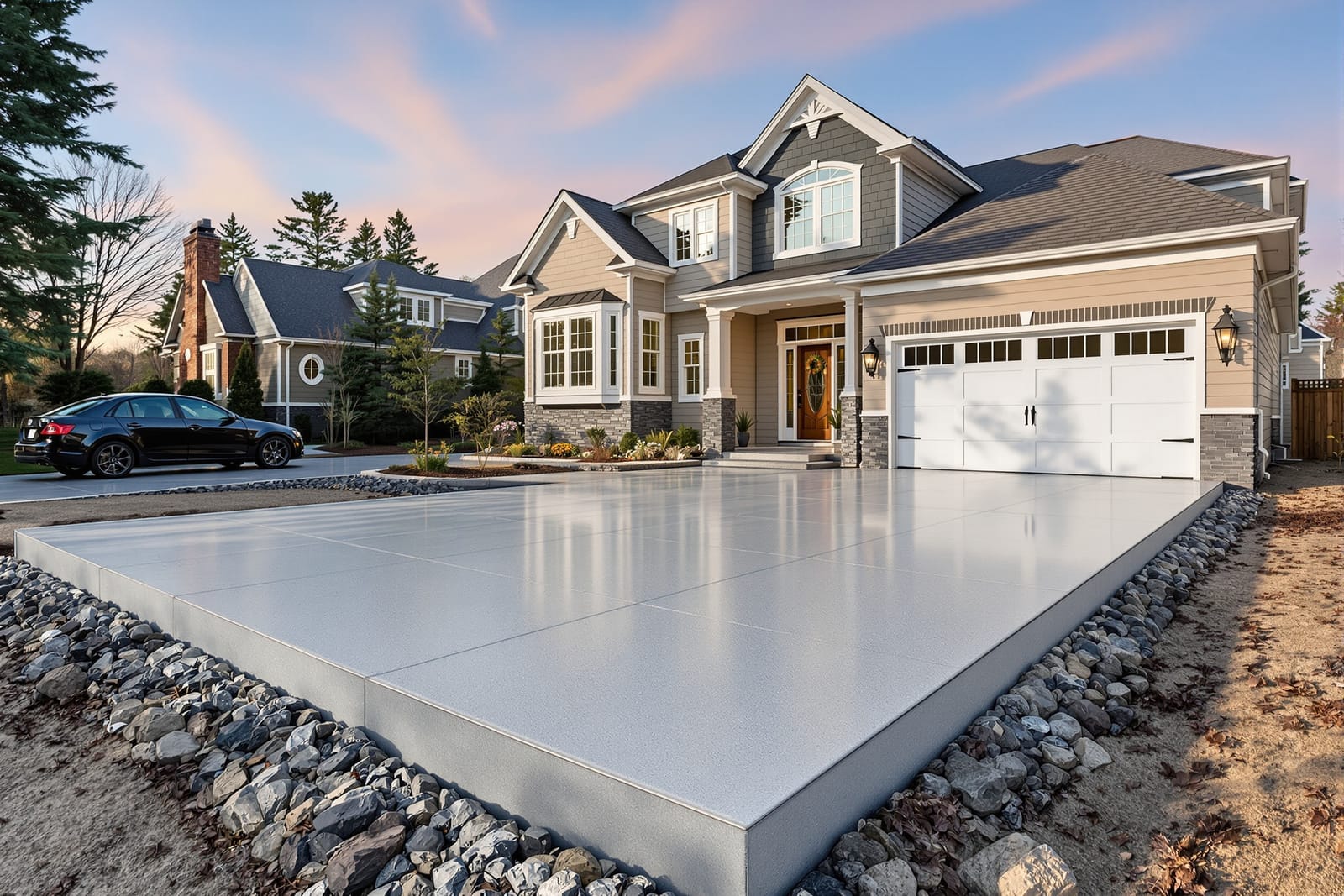
Whether you need a base for a shed, garage, or new room, we install concrete slabs in Cincinnati, OH that are flat, strong, and properly reinforced. Our team handles excavation, gravel prep, vapor barriers, and finishing so your project starts on a solid foundation. We pour to the correct thickness and strength for your specific use.
Superior Concrete Cincinnati provides professional concrete slab throughout Cincinnati, OH, Ohio and the surrounding area. Our licensed, insured crew delivers safe, clean, on-time work with a free estimate before anything begins. Call (513) 993-5657 or request your free quote.
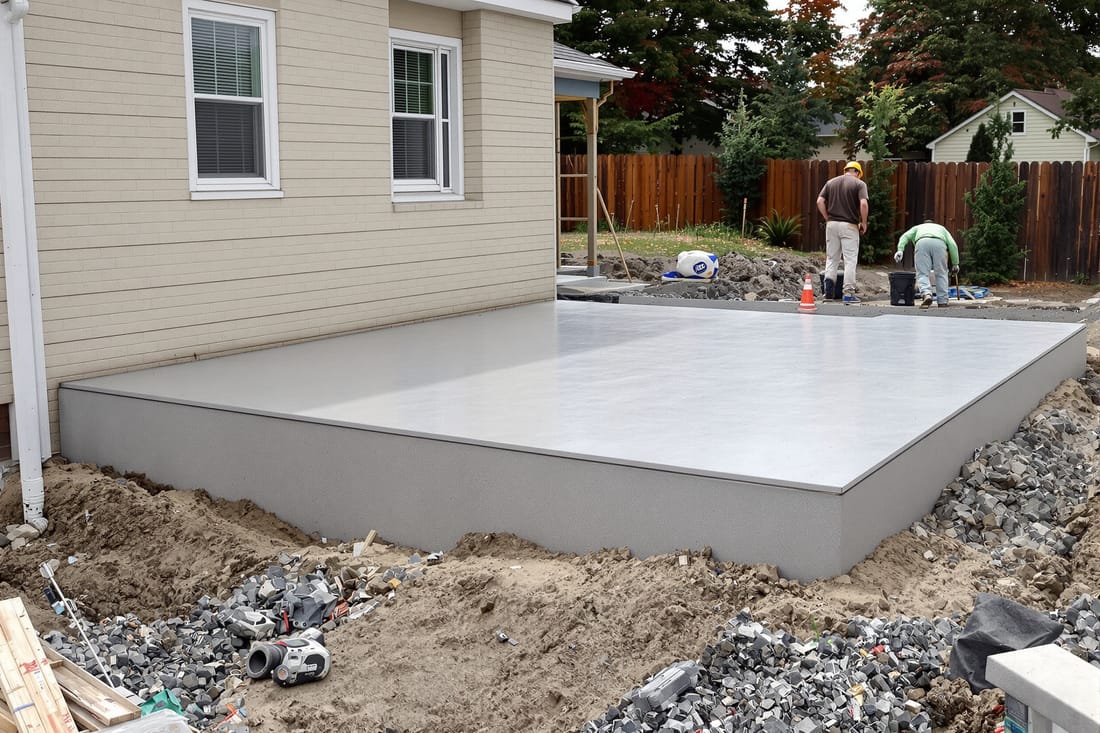
Concrete slab installation in Cincinnati, done the right way
When you call Superior Concrete Cincinnati for a concrete slab, we start by making sure the slab is actually designed for what you want to use it for. A patio, a garage floor, and a hot tub pad all need different thicknesses, reinforcement, and base prep. We ask about what is going on the slab, how close we can get with trucks or equipment on your property, and what kind of drainage you already have in that part of your yard.
On Cincinnati properties, we routinely see poor soil in backyards, old fill dirt next to older homes, and tight access in city neighborhoods. Those details change how we build the slab. Sometimes we bring in a smaller buggy to move concrete if the truck cannot reach. Other times we remove soft topsoil and install a compacted aggregate base so the slab does not settle and crack unevenly.
Our team explains trade offs in plain language. For example, a basic 4 inch slab with wire mesh might be fine for a simple shed, while a 5 or 6 inch slab with rebar and thicker edges is better for a driveway that will see pickup trucks. You choose what makes sense for your budget and use, and we size the slab and reinforcement to match instead of using a one size fits all approach.
How we actually build your concrete slab
A strong slab starts long before the concrete truck shows up. Superior Concrete Cincinnati begins by marking the layout and checking elevations with a laser level so surface water will run away from your house, not toward the foundation. We then remove grass, roots, loose fill, and any soft spots. In many Cincinnati yards we need to dig a little deeper in clay pockets or old backfill so the base is uniform.
Next, we bring in crushed stone or gravel and compact it in thin layers using a plate compactor. This step matters in our freeze and thaw climate because a well compacted base drains better and reduces frost heave. We typically use 4 to 6 inches of base for patios and walks and more for driveways or heavier loads. Around the perimeter against existing concrete or your foundation wall, we install expansion material so the slab has room to move a little without pushing against your house.
Forms are set using straight lumber or metal forms, staked and braced so they do not bow when the concrete goes in. We check squareness and final elevations again before we call for the concrete truck. Reinforcement goes in at this point, which might be welded wire mesh, rebar laid out in a grid, or fiber reinforced concrete in some applications. We support mesh or rebar on chairs or stones so it sits in the middle of the slab where it actually does some good instead of lying useless at the bottom.
When the concrete arrives, we place it quickly and evenly. We use rakes and come along tools, not shovels that can segregate the mix. A screed board or powered screed brings the slab to final grade. Then we float the surface to embed aggregate and bring up paste for finishing. For larger slabs in Cincinnati summers, we often cut the placement into sections so we can finish each one correctly before the surface sets too fast in the heat and humidity.
Finish options, joints, and curing that prevent future problems
The visible surface and the invisible details both matter. Superior Concrete Cincinnati talks through finish options with you ahead of time so you know what you are getting. For garages, basements, and interior slabs, a smooth steel trowel finish is common. For exterior patios, walkways, and driveway slabs, we usually recommend a light broom finish that gives traction in rain, snow, and on icy mornings. We can also offer decorative options like colored concrete, cut borders, or a tighter broom pattern if you want a cleaner look.
Control joints (sometimes called contraction joints) are crucial in our region. Concrete will crack as it shrinks and moves with temperature changes. We intentionally create weakened planes by saw cutting or tooling joints at specific spacing so that when cracks form, they follow those straight lines instead of appearing randomly across the slab. For a typical 4 inch slab, we lay out joints so no panel is more than about 10 to 12 feet in either direction, and often smaller for odd shapes.
Curing is where many DIY slabs and some low bid jobs fail. Concrete needs moisture retention and time to reach its strength. We apply a curing compound or use wet curing methods, depending on the job, to keep the surface from drying too quickly. In hot Cincinnati summers or on windy days, we plan the pour for cooler hours when possible and watch the surface closely so it does not crust over on top while the bottom is still plastic.
We also talk with you about realistic timelines. Most residential slabs can be walked on within 24 to 48 hours but should not see vehicle traffic for at least 5 to 7 days, sometimes longer for heavy loads. If you are putting a shed, swim spa, or equipment on the slab, we recommend waiting a minimum of a week, and we can advise on exact timing based on the mix used and weather conditions.
What affects the cost of a concrete slab in Cincinnati
Customers often want to know why two slabs of the same size can end up at different price points. At Superior Concrete Cincinnati, we are up front about what drives the cost so you can decide what is worth paying for.
Access is one of the biggest factors in Cincinnati neighborhoods. If a concrete truck can back right up to the forms, labor time and equipment costs stay down. If we have to pump concrete over a house or around the back through narrow side yards, the cost climbs because of extra setup, hoses, and crew time. Similarly, a backyard on a steep hillside above the Ohio River will require more grading and retaining than a flat lot in the suburbs.
Soil conditions and base prep also play a major role. A simple scrape and pour on firm, well drained soil is cheaper than a job where we have to excavate deeper, remove old broken concrete, or haul in and compact additional stone to correct poor subgrade. Many older Cincinnati properties have unknown fill from past projects. When we probe that area during the estimate, we can usually tell if there is a risk of settlement and let you know what is needed.
The concrete mix and reinforcement you choose affect both cost and performance. Higher strength concrete, air entrainment for freeze thaw durability, thicker slabs, extra rebar, or fiber reinforcement all add some cost but can be important if you plan to park heavy vehicles, use deicing salts, or set a hot tub or workshop on the slab. Finish options like decorative borders, colored concrete, or saw cut patterns add labor time too. We break out these options in writing so you can see the difference between a basic functional slab and an upgraded design.
Finally, timing and season have an impact. Pouring in the dead of winter in Cincinnati may require insulated blankets, hot water in the mix, and accelerators to keep the slab from freezing while it cures. That adds cost. Shoulder seasons in spring and fall are usually the sweet spot for value and performance, and we can often schedule more flexibly then.
Why local experience matters for your slab and how to get started
Concrete slab work looks simple from the outside, but Cincinnati weather and soil can be unforgiving if details are missed. Superior Concrete Cincinnati has worked through wet springs, humid summers, and freeze thaw cycles for years, so we design slabs with those real world conditions in mind. That includes proper slopes away from foundations, air entrained mixes for exterior slabs, and joints that match the layout of your house and yard instead of being placed randomly.
We are also familiar with local permitting requirements and typical neighborhood expectations. Some municipalities around Cincinnati want permits for larger slabs, especially if they support garages or accessory buildings. We can help you understand when permits or inspections are necessary and how to position the slab to respect property lines, easements, and drainage patterns. This avoids headaches later if you go to sell the house or add structures on the slab.
Our process to get started is straightforward. We visit the site, take measurements, check access, and look closely at soil and drainage. We listen to how you plan to use the slab, then provide a written proposal that spells out thickness, reinforcement, base depth, finish type, and joint layout, not just a vague square foot price. If you approve, we schedule around weather and your calendar, keep you updated if conditions change, and walk the slab with you after the pour to discuss care and curing.
If you need a concrete slab for a new garage, shed, patio, hot tub, or equipment pad anywhere in the Cincinnati, Ohio area, Superior Concrete Cincinnati is ready to help. You get a slab that is sized, reinforced, and finished for what you actually need, built with local knowledge, and installed by a crew that does this work every day.